

Botox Injection for Pain
ⓘ Not coveredBotox can quiet overactive nerves and muscles that drive chronic migraine, post-traumatic headache, or muscle-related neck and jaw pain. Effect builds over 1 to 2 weeks and typically lasts about 3 months.
We are a North York pain clinic. Our specialty is precise ultrasound- and X-ray-guided injections that calm the source of your pain — most of them covered by OHIP. If you have been hurting for months or years, you are in the right place.
Show me treatments for where I hurt See what OHIP covers
Family-doctor referral required · OHIP-covered procedures
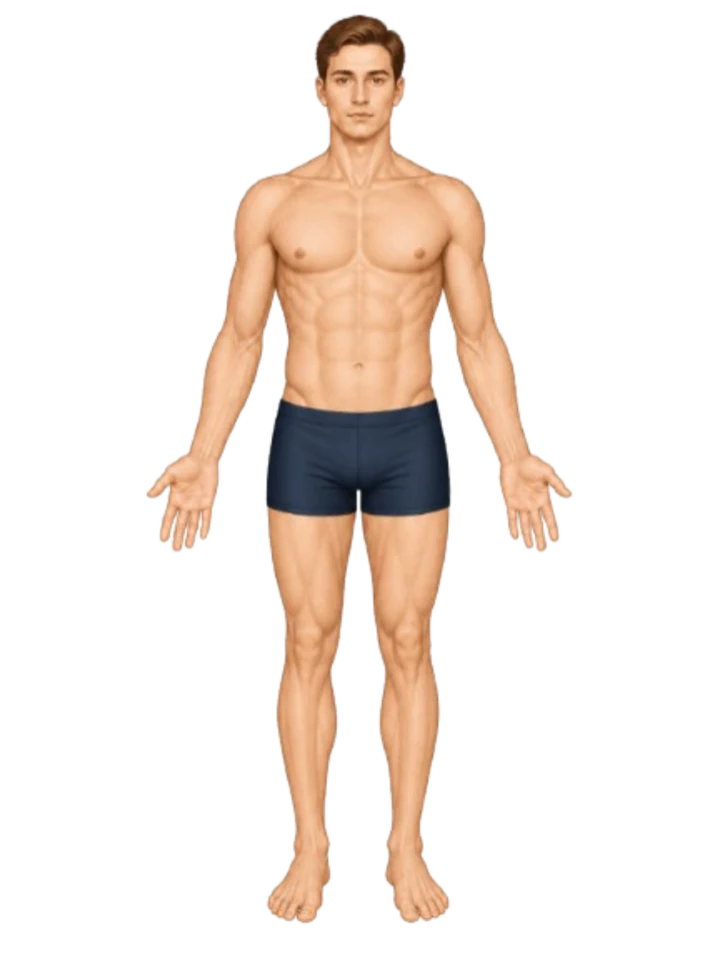
Click on the part of your body that hurts. We will show you the treatments we offer for that area, all done in our clinic by a fellowship-trained pain specialist.
Body diagram — choose the part that hurts to see your treatment options.
A drawing of the body with 8 areas you can select: head and face, neck, shoulder, upper or mid back, lower back, hip, knee, foot and ankle. Use the toggle above the figure to switch between front and back views.
Tap an area to see your options →
Choose an area of the body to start.
We will show you the procedures we offer there, and clearly mark which ones OHIP covers.
Botox can quiet overactive nerves and muscles that drive chronic migraine, post-traumatic headache, or muscle-related neck and jaw pain. Effect builds over 1 to 2 weeks and typically lasts about 3 months.
An injection that targets a specific nerve outside the spine — for example, the occipital nerve at the base of the skull, or the suprascapular nerve at the shoulder. Calms the nerve that is feeding your pain.
A regenerative injection using concentrated cells and growth factors drawn from your own bone marrow. We typically consider this for advanced joint arthritis or stubborn tendon and cartilage problems when other treatments have not held.
Botox can quiet overactive nerves and muscles that drive chronic migraine, post-traumatic headache, or muscle-related neck and jaw pain. Effect builds over 1 to 2 weeks and typically lasts about 3 months.
A fluoroscopy-guided steroid injection into the epidural space of the neck. Used when neck pain travels down the arm (cervical radiculopathy) — calms the inflamed nerve root, typically 4–12 weeks of relief.
A fluoroscopy-guided steroid injection into the small facet joints at the back of the neck. Used for arthritic or post-whiplash neck pain — both confirms the source and relieves it, typically 4–12 weeks.
A diagnostic injection that numbs the small nerves supplying the cervical facet joints. If your neck pain quiets, we know the facets are the source — and you become a candidate for radiofrequency ablation.
An injection that targets a specific nerve outside the spine — for example, the occipital nerve at the base of the skull, or the suprascapular nerve at the shoulder. Calms the nerve that is feeding your pain.
A regenerative injection using a processed form of your own platelets in which the healing growth factors are released up front. We typically consider this for nerve-related and tendon pain where a gentler regenerative option is preferred.
A regenerative injection using the healing factors from your own blood. We typically offer this for chronic tendon problems or arthritis when other injections have lost their effect.
Using a fine probe, we gently heat the specific nerve carrying the pain signal from a spinal facet joint. When that nerve quiets down, relief typically lasts 6 to 12 months.
A small injection of local anaesthetic into the tight, painful muscle knots that come with myofascial pain. Releases the muscle on the spot, easing tension and referred pain.
A regenerative injection using concentrated cells and growth factors drawn from your own bone marrow. We typically consider this for advanced joint arthritis or stubborn tendon and cartilage problems when other treatments have not held.
A steroid injection placed directly into a joint to settle arthritis pain or inflammation. Works for shoulders, knees, hips, elbows, wrists, ankles, and the smaller joints of the fingers and toes.
A gel-like injection that supplements the natural lubricant in your joint. Often used for knee or hip arthritis when steroid injections have stopped giving you the relief they used to.
An injection that targets a specific nerve outside the spine — for example, the occipital nerve at the base of the skull, or the suprascapular nerve at the shoulder. Calms the nerve that is feeding your pain.
A regenerative injection using a processed form of your own platelets in which the healing growth factors are released up front. We typically consider this for nerve-related and tendon pain where a gentler regenerative option is preferred.
A regenerative injection that uses the healing factors from your own blood to settle shoulder pain. We typically offer this for rotator-cuff tendinopathy or stubborn shoulder tendon pain when other injections have lost their effect.
A small injection of local anaesthetic into the tight, painful muscle knots that come with myofascial pain. Releases the muscle on the spot, easing tension and referred pain.
A regenerative injection using concentrated cells and growth factors drawn from your own bone marrow. We typically consider this for advanced joint arthritis or stubborn tendon and cartilage problems when other treatments have not held.
A steroid injection placed directly into a joint to settle arthritis pain or inflammation. Works for shoulders, knees, hips, elbows, wrists, ankles, and the smaller joints of the fingers and toes.
A regenerative injection using a processed form of your own platelets in which the healing growth factors are released up front. We typically consider this for nerve-related and tendon pain where a gentler regenerative option is preferred.
A regenerative injection that uses the healing factors from your own blood to settle stubborn elbow tendon pain — typically offered for tennis or golfer's elbow when steroid injections have lost their effect.
A regenerative injection using concentrated cells and growth factors drawn from your own bone marrow. We typically consider this for advanced joint arthritis or stubborn tendon and cartilage problems when other treatments have not held.
A steroid injection placed directly into a joint to settle arthritis pain or inflammation. Works for shoulders, knees, hips, elbows, wrists, ankles, and the smaller joints of the fingers and toes.
A regenerative injection using a processed form of your own platelets in which the healing growth factors are released up front. We typically consider this for nerve-related and tendon pain where a gentler regenerative option is preferred.
A regenerative injection that uses the healing factors from your own blood to settle hand and wrist pain — typically offered for thumb-base arthritis or chronic wrist tendon pain when other injections have lost their effect.
A regenerative injection using concentrated cells and growth factors drawn from your own bone marrow. We typically consider this for advanced joint arthritis or stubborn tendon and cartilage problems when other treatments have not held.
A precise injection of long-acting anti-inflammatory medication into the small joints between your vertebrae. Used to relieve confirmed facet-joint pain — typically 4–12 weeks of relief.
An image-guided steroid injection placed between the vertebrae to calm inflamed nerve roots in the neck, mid-back, or low back. Most people feel relief within a week, lasting 4 to 12 weeks.
A diagnostic injection that numbs the small nerves supplying the facet joints. If your pain quiets, we know facets are the source — and you become a candidate for radiofrequency ablation.
A regenerative injection using a processed form of your own platelets in which the healing growth factors are released up front. We typically consider this for nerve-related and tendon pain where a gentler regenerative option is preferred.
A regenerative injection using the healing factors from your own blood. We typically offer this for chronic tendon problems or arthritis when other injections have lost their effect.
Using a fine probe, we gently heat the specific nerve carrying the pain signal from a spinal facet joint. When that nerve quiets down, relief typically lasts 6 to 12 months.
A more targeted version of the epidural injection — placed precisely at the spinal nerve root that imaging shows is being compressed. Used when one specific nerve is the source of your pain.
A small injection of local anaesthetic into the tight, painful muscle knots that come with myofascial pain. Releases the muscle on the spot, easing tension and referred pain.
A regenerative injection using concentrated cells and growth factors drawn from your own bone marrow. We typically consider this for advanced joint arthritis or stubborn tendon and cartilage problems when other treatments have not held.
A precise injection of long-acting anti-inflammatory medication into the small joints between your vertebrae. Used to relieve confirmed facet-joint pain — typically 4–12 weeks of relief.
An image-guided steroid injection placed between the vertebrae to calm inflamed nerve roots in the neck, mid-back, or low back. Most people feel relief within a week, lasting 4 to 12 weeks.
A diagnostic injection that numbs the small nerves supplying the facet joints. If your pain quiets, we know facets are the source — and you become a candidate for radiofrequency ablation.
A regenerative injection using a processed form of your own platelets in which the healing growth factors are released up front. We typically consider this for nerve-related and tendon pain where a gentler regenerative option is preferred.
A regenerative injection using the healing factors from your own blood. We typically offer this for chronic tendon problems or arthritis when other injections have lost their effect.
Using a fine probe, we gently heat the specific nerve carrying the pain signal from a spinal facet joint. When that nerve quiets down, relief typically lasts 6 to 12 months.
A fluoroscopy-guided steroid injection into the sacroiliac joint. Used for one-sided buttock or low-back pain caused by SI joint dysfunction or sacroiliitis. Both diagnostic and therapeutic in one visit — typically 6–12 weeks of relief.
A more targeted version of the epidural injection — placed precisely at the spinal nerve root that imaging shows is being compressed. Used when one specific nerve is the source of your pain.
A small injection of local anaesthetic into the tight, painful muscle knots that come with myofascial pain. Releases the muscle on the spot, easing tension and referred pain.
A regenerative injection using concentrated cells and growth factors drawn from your own bone marrow. We typically consider this for advanced joint arthritis or stubborn tendon and cartilage problems when other treatments have not held.
A steroid injection placed directly into a joint to settle arthritis pain or inflammation. Works for shoulders, knees, hips, elbows, wrists, ankles, and the smaller joints of the fingers and toes.
A precise injection of long-acting anti-inflammatory medication into the hip joint. Used for hip arthritis pain that has not settled with physiotherapy and activity modification — typically 4–12 weeks of relief.
A gel-like injection that supplements the natural lubricant in your joint. Often used for knee or hip arthritis when steroid injections have stopped giving you the relief they used to.
An injection that targets a specific nerve outside the spine — for example, the occipital nerve at the base of the skull, or the suprascapular nerve at the shoulder. Calms the nerve that is feeding your pain.
A regenerative injection using a processed form of your own platelets in which the healing growth factors are released up front. We typically consider this for nerve-related and tendon pain where a gentler regenerative option is preferred.
A regenerative injection that uses the healing factors from your own blood to settle hip pain — typically offered for hip osteoarthritis or gluteal tendon pain when other injections have lost their effect.
A fluoroscopy-guided steroid injection into the sacroiliac joint. Used for one-sided buttock or low-back pain caused by SI joint dysfunction or sacroiliitis. Both diagnostic and therapeutic in one visit — typically 6–12 weeks of relief.
A regenerative injection using concentrated cells and growth factors drawn from your own bone marrow. We typically consider this for advanced joint arthritis or stubborn tendon and cartilage problems when other treatments have not held.
A steroid injection placed directly into a joint to settle arthritis pain or inflammation. Works for shoulders, knees, hips, elbows, wrists, ankles, and the smaller joints of the fingers and toes.
A gel-like injection that supplements the natural lubricant in your joint. Often used for knee or hip arthritis when steroid injections have stopped giving you the relief they used to.
A regenerative injection using a processed form of your own platelets in which the healing growth factors are released up front. We typically consider this for nerve-related and tendon pain where a gentler regenerative option is preferred.
A regenerative injection that uses the healing factors from your own blood to settle knee pain. We typically offer this for knee osteoarthritis or stubborn kneecap-tendon pain when other injections have lost their effect.
A regenerative injection using concentrated cells and growth factors drawn from your own bone marrow. We typically consider this for advanced joint arthritis or stubborn tendon and cartilage problems when other treatments have not held.
A steroid injection placed directly into a joint to settle arthritis pain or inflammation. Works for shoulders, knees, hips, elbows, wrists, ankles, and the smaller joints of the fingers and toes.
A regenerative injection using a processed form of your own platelets in which the healing growth factors are released up front. We typically consider this for nerve-related and tendon pain where a gentler regenerative option is preferred.
A regenerative injection that uses the healing factors from your own blood to settle foot and ankle pain — typically offered for plantar fasciitis or Achilles tendinopathy when other treatment has not helped.
11+
years caring for Toronto patients in North York
Image-guided
every injection placed under live ultrasound or X-ray — no guesswork
OHIP
covers most procedures when you have a referral from your family doctor
PHIPA
your health records stay private, by Ontario law
Specialist clinics in Ontario need a referral from your family doctor or another physician. They can fax it or send it electronically — either is fine.
Once your referral arrives, our intake team will call you to set up a time. First visits usually happen within 2 to 4 weeks.
Your OHIP card, recent imaging reports, a list of medications you are taking, and any notes from previous pain treatment. Please come 15 minutes early so we can finish the paperwork.
Real questions from real referrals — answered plainly, with no medical jargon, so you can plan your visit with confidence.
Most of the procedures we perform — including epidural steroid injections, facet joint injections, medial branch blocks, and nerve root blocks — are covered by OHIP under the procedure code for image-guided injections.
The steroid medication itself (e.g., Depo-Medrol or Kenalog) is on the Ontario Drug Benefit (ODB) formulary:
Yes. Like all specialist consultations in Ontario, you need a written referral from your family physician or another specialist before we can book your first consult. If you do not have a family doctor, walk-in clinics can also issue referrals after assessing you. Once you are an established patient, follow-up appointments do not require a new referral.
Image guidance means we use real-time ultrasound or fluoroscopy (live X-ray) to see exactly where the needle is going. This makes the injection more accurate and safer than a blind injection — we can confirm the medication reaches the nerve, joint, or tissue that is generating your pain, and avoid critical structures like blood vessels and the spinal cord. Most interventional pain procedures we perform use one of these two imaging modalities.
Wait times vary with referral volume, but most new patients are seen within 3 to 6 weeks of their referral being received. Urgent referrals (e.g., cancer pain, severe radiculopathy) are triaged and seen sooner. You can check the current wait estimate on our homepage banner.
Most patients describe the discomfort as similar to a blood draw or vaccination — a brief sting from the local anaesthetic, followed by pressure during the procedure. We use a fine-gauge needle and numb the skin before the injection. The procedure itself typically takes 5 to 15 minutes. Some procedures (e.g., radiofrequency ablation) are longer and may involve mild sedation.
It depends on the procedure and the underlying condition. Steroid injections typically provide relief lasting weeks to several months. Radiofrequency ablation can provide 6 to 18 months of relief. Diagnostic blocks are usually short-lived (hours) and are used to confirm the source of pain before a longer-acting treatment. We will give you a realistic expectation at your consultation based on your specific diagnosis.
We treat chronic musculoskeletal and nerve-related pain, including: lower back pain, sciatica, herniated discs, spinal stenosis, neck pain, facet joint arthritis, sacroiliac joint dysfunction, shoulder bursitis and rotator cuff pain, hip osteoarthritis, knee osteoarthritis, plantar fasciitis, post-surgical pain, complex regional pain syndrome (CRPS), trigeminal neuralgia, and occipital neuralgia. If your pain has persisted longer than 3 months despite physiotherapy or medication, you are likely a candidate for assessment.
For most spinal injections (epidurals, facet blocks) we recommend that someone drive you home, particularly if it is your first procedure or if the injection is in your cervical spine. For peripheral joint injections (knee, shoulder, hip) without sedation, you can usually drive yourself. We will confirm with you at booking.
Still wondering about something? Ask us directly — we usually reply within one business day.
416-398-1516
thepainclinictoronto@gmail.com
Monday – Friday: 8:00 am – 4:00 pm
Closed weekends and statutory holidays
Across our staff. Tell us when you book if you need a specific language.
English Russian Farsi Spanish Cantonese Mandarin Korean Arabic
Near the Dufferin & Finch West intersection. Steps from TTC stops on Finch Avenue West. Free patient parking on-site.
Driving from the 401: Take Exit 366 to Allen Road north. Allen Road ends at Sheppard — continue north on Dufferin Street, then turn left onto Champagne Drive. The clinic is in Champagne Centre on the right.
Driving from the 400: Exit at Finch Avenue West and head east. Turn right onto Dufferin Street, then right onto Champagne Drive.
By TTC: Take the 36 Finch West bus to the Dufferin & Finch West stop and walk south on Dufferin to Champagne Drive (about 4 minutes).
Parking: Free on-site parking for patients in the Champagne Centre lot. Wheelchair-accessible spots are next to the main entrance.
Accessibility: The building, our clinic, and our washrooms are all wheelchair accessible. Let us know in advance if you need extra time or assistance.
In a medical emergency, call 911 or go to your nearest emergency department. Our clinic does not handle urgent or emergency care.